
In an age of digital noise, print is power
In an over-saturated digital landscape where AI ‘slop’ and homogenisation reign supreme, print media is making a quiet comeback. Through limited circulation, physical presence and editorial intent, print offers a different kind of brand authority – one that is felt rather than scrolled. Here’s how leading houses are deploying print in 2026.
Byredo
Byredo uses print as a means of emotional abstraction to deepen its brand world. Alongside limited-edition books tied to projects such as Infra Luna and Bibliothèque, Byredo produces campaign booklets that translate scent into image, texture and narrative rather than product description. These printed works deepen the atmosphere around each fragrance, allowing meaning to accumulate rather than be asserted.
Operating across fragrance, fashion and art, Byredo relies on print to formalise its cross-disciplinary position. By publishing authored material in book form, the brand reinforces restraint and cultural credibility while maintaining distance from the literalism of digital marketing.
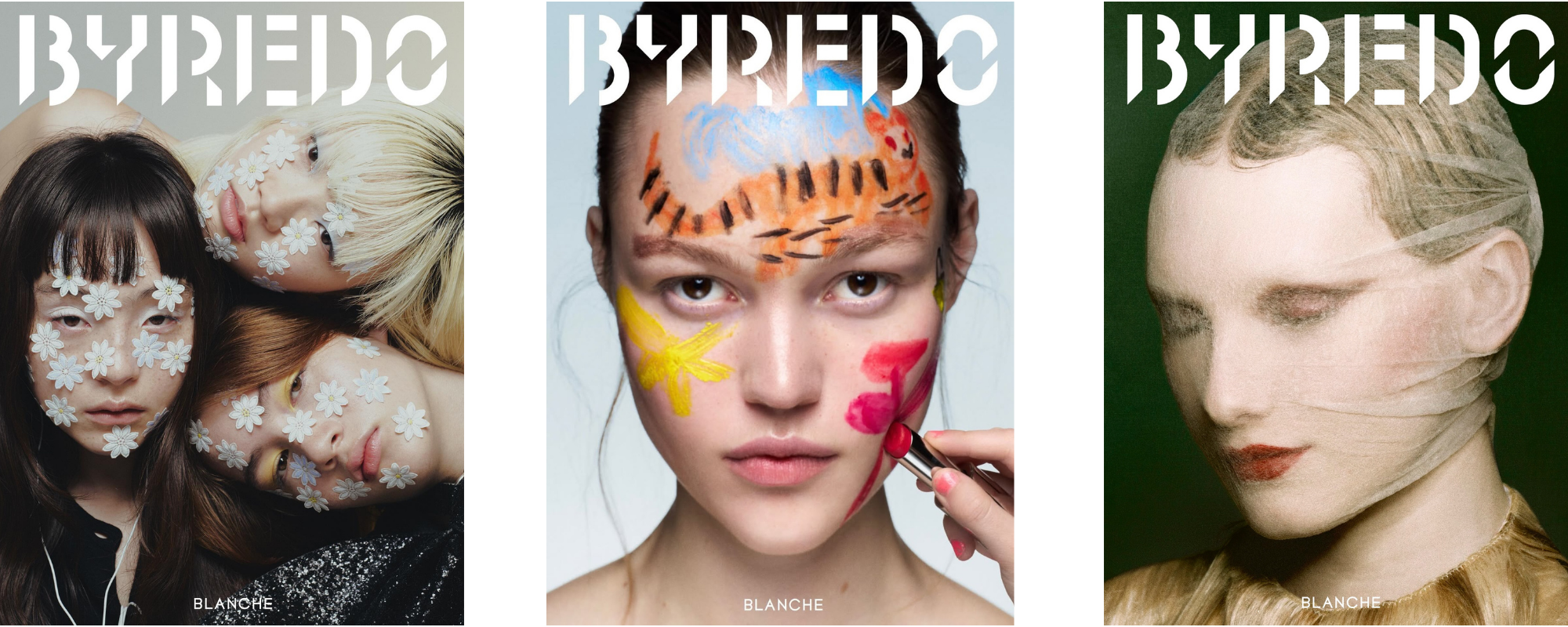
Byredo Magazine, Issue 3, 2026.
Miu Miu
Miu Miu plays with print a little differently than most. Rather than distributing its own print media as brand messaging, the fashion house uses print to signal cultural authority.
Through initiatives like the Miu Miu Literary Club and Summer Reads, the house positions itself within literature, criticism and female intellectual life. Print becomes a way to commission thought, support writers and signal consumer-aligned values.
The result is a brand strategy that feels selective, authored, aspirational and ideologically grounded, reinforcing Miu Miu as a cultural patron rather than a seasonal storyteller.
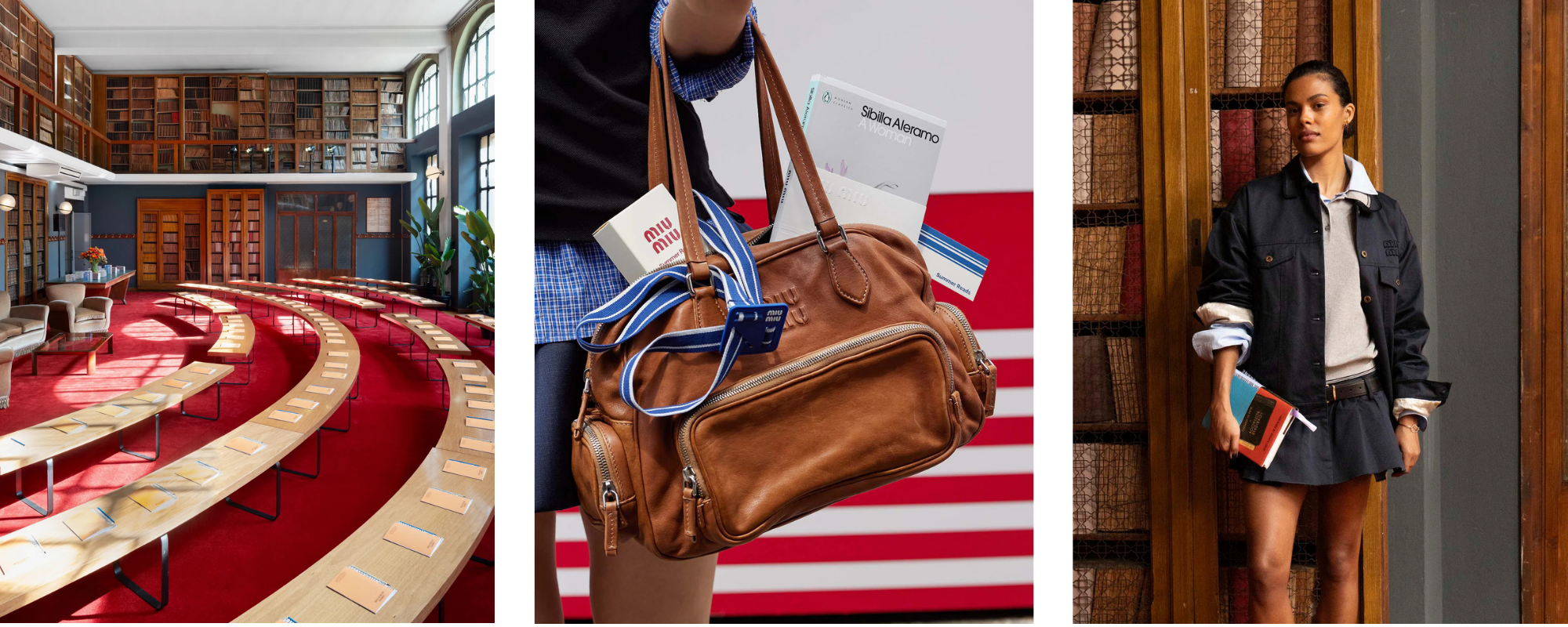
Left and right: Miu Miu Literary Club, 2025; centre: Miu Miu Summer Reads, 2024.
Acne Studios
Acne Studios has institutionalised print through Acne Paper, the biannual cultural journal relaunched in 2021 after a decade-long hiatus. Each issue centres on a single theme, commissioning writers, artists and photographers to contribute long-form essays and original imagery, with distribution extending beyond fashion retail into bookstores and cultural venues. The publication operates with editorial independence, positioning itself closer to a cultural journal than a brand magazine.
For Acne Studios, Acne Paper consolidates intellectual credibility and long-term authorship. It creates a structured platform for thematic exploration that extends beyond the fashion cycle, allowing the brand to engage with art, literature and visual culture without reducing that engagement to promotion.
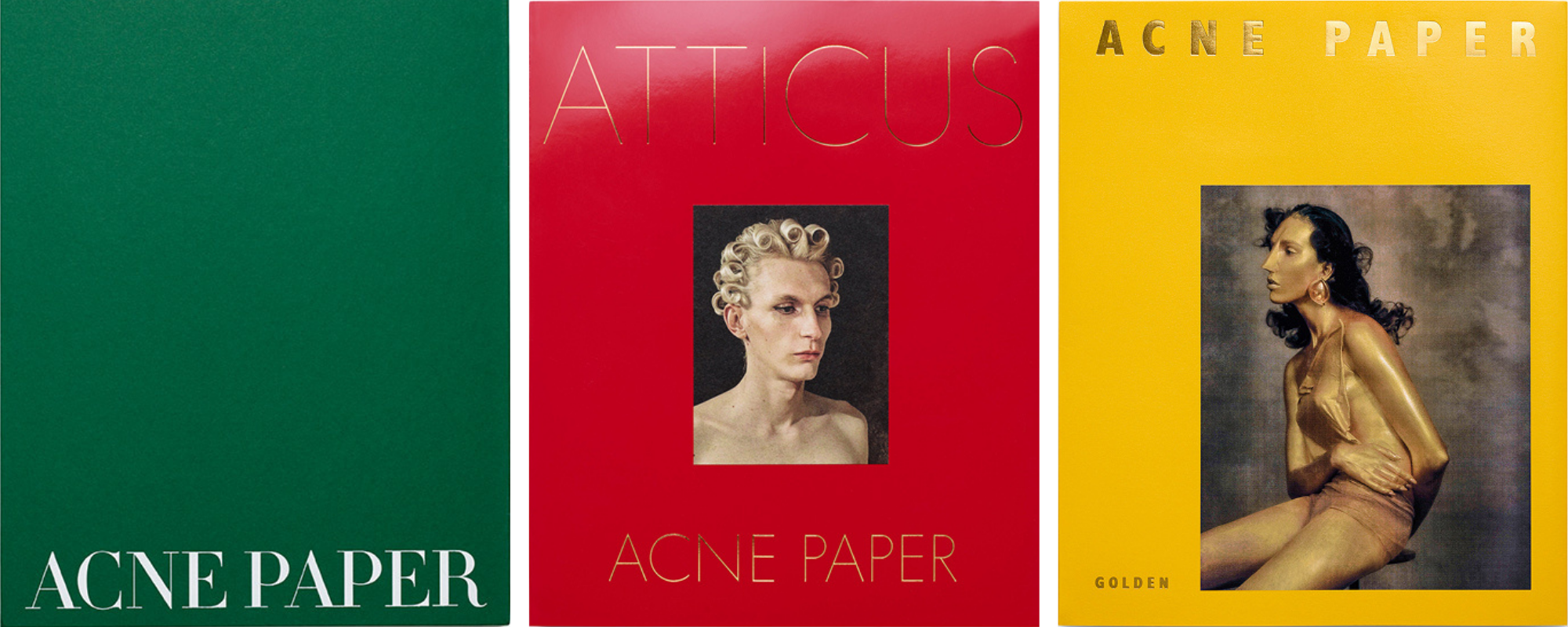
Left to right: Acne Paper Book, 2021; Acne Paper, Atticus. Issue 17, A/W 2022; Acne Paper, Golden. Issue 20, S/S 2025.
LOEWE
LOEWE approaches print as a long-term cultural investment rather than a seasonal communication tool.
The launch of its house publication in 2023 formalised an existing ecosystem that includes the annual LOEWE Foundation Craft Prize catalogue and exhibition books accompanying Crafted World, the brand’s touring retrospective. These publications document artisanship, material experimentation and cultural research, positioning LOEWE within craft and contemporary art as much as fashion.
In an industry driven by acceleration, print allows LOEWE to anchor its narrative in material knowledge and continuity. By evidencing process and intellectual investment in tangible form, the brand strengthens long-term authority.
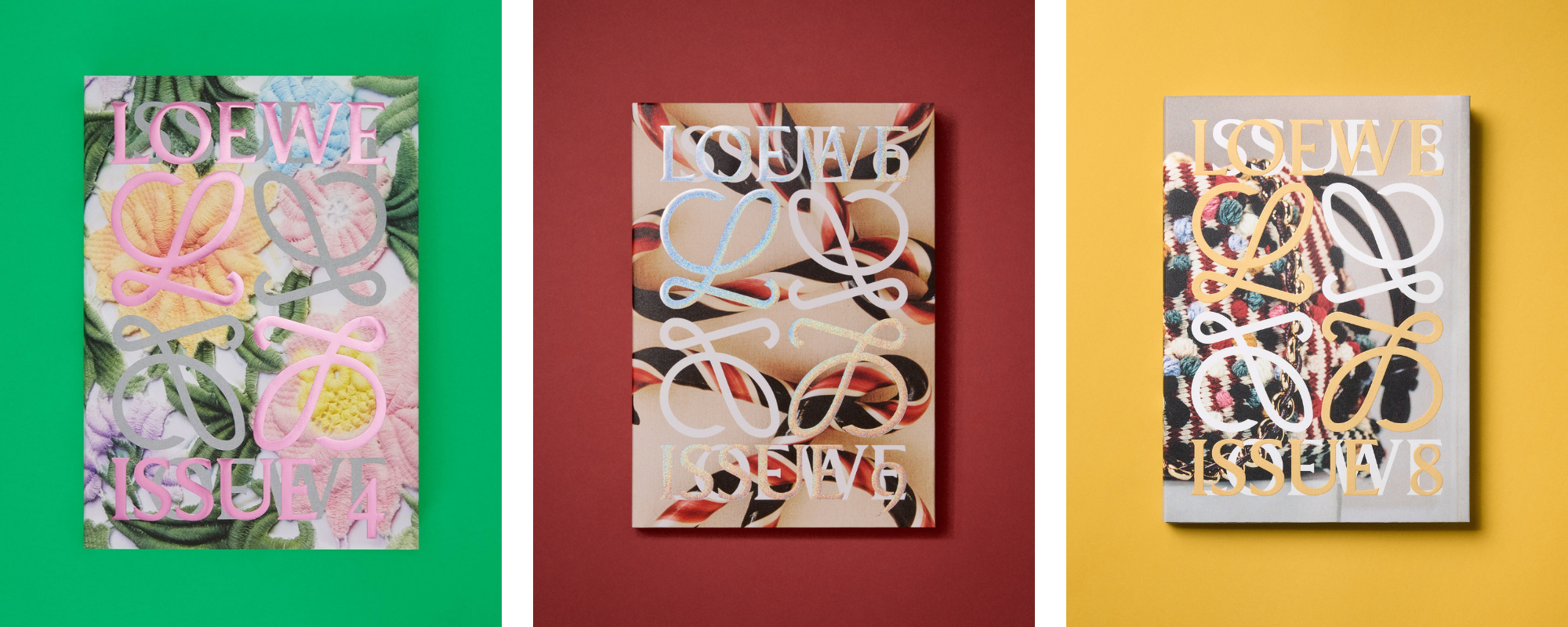
Left to right: LOEWE Magazine, Issue 4; LOEWE Magazine, Issue 9; LOEWE Magazine, Issue 8.
Patta
Patta’s relationship with print is rooted in community rather than campaign. Through long-running publications, zines and editorial projects developed alongside music, activism and youth culture, print functions as a tool for documentation and dialogue. Rather than amplifying product, these publications foreground voices from within the Patta network, creating space for cultural reflection and collective memory.
Strategically, this approach positions print as infrastructure for belonging. It archives scenes, movements and conversations that exist beyond seasonal drops. For brand leaders, the lesson is that print can operate as social capital, strengthening credibility through participation and community.
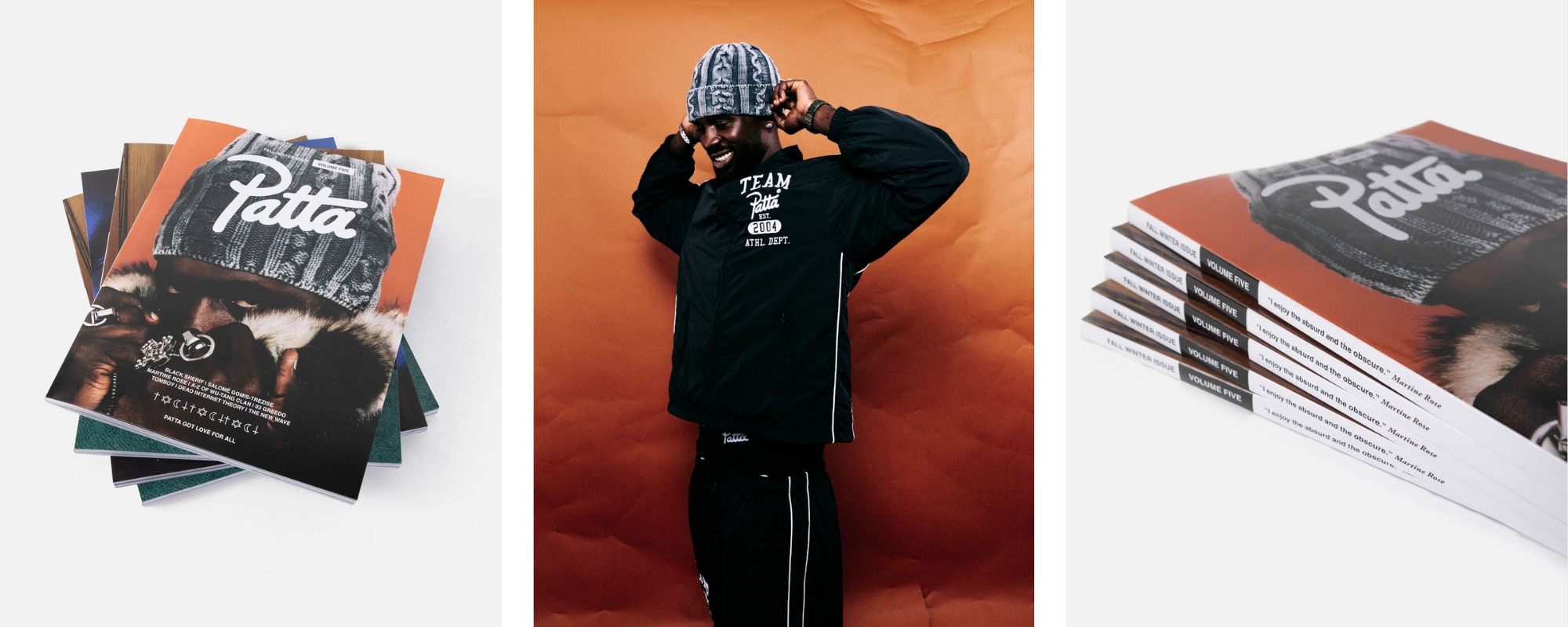
Black Sherif for Patta Magazine, Volume 5.
Dior
Dior has built a controlled publishing ecosystem that operates alongside its global fashion and beauty business. At its centre is Dior Magazine, a recurring title distributed internationally, complemented by exhibition catalogues accompanying major retrospectives such as Christian Dior: Designer of Dreams, as well as fragrance and heritage books released through partners including Rizzoli. Together, these publications formalise the house’s narrative across couture, ready-to-wear and beauty in durable form.
For a brand operating at scale, print provides narrative cohesion. It stabilises meaning across categories, counterbalances the velocity of shows and launches, and positions Dior not only within cultural discourse but as a producer of it.
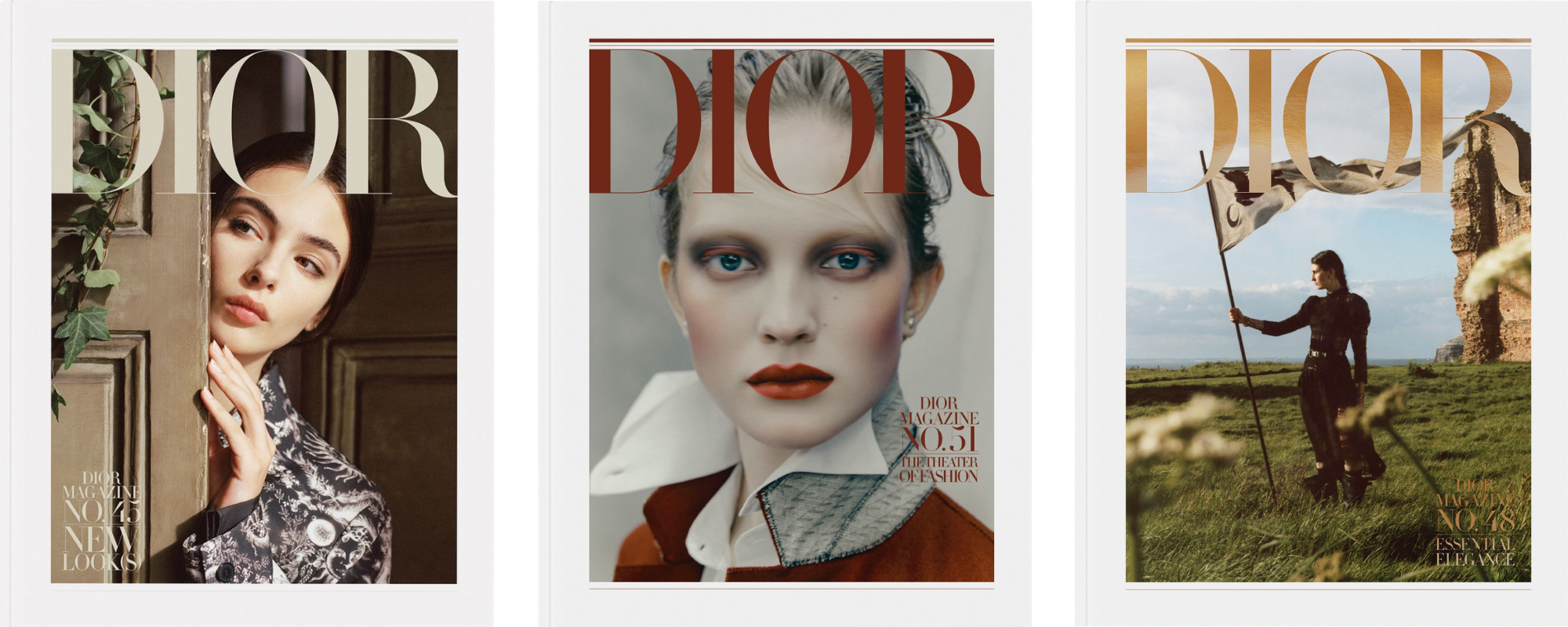
Left to right: Dior Magazine, No.45; Dior Magazine, No.51; Dior Magazine, No.48.
Aesop
Aesop’s approach to print is anchored in Aesop Zine, an ongoing publication that commissions writers, philosophers and cultural practitioners to explore themes such as ethics, urban life and environmental responsibility. Distributed through stores globally, the zine sits alongside locally produced newspapers created to mark new store openings, as well as essay-led booklets developed in collaboration with architects and artists.
The 2022 publication of Aesop: The Book with Rizzoli further formalised this editorial direction, codifying the brand’s design philosophy and retail thinking in hardback form. Collectively, these outputs position print as a recurring platform for ideas, reinforcing Aesop’s identity as values-led and intellectually authored.
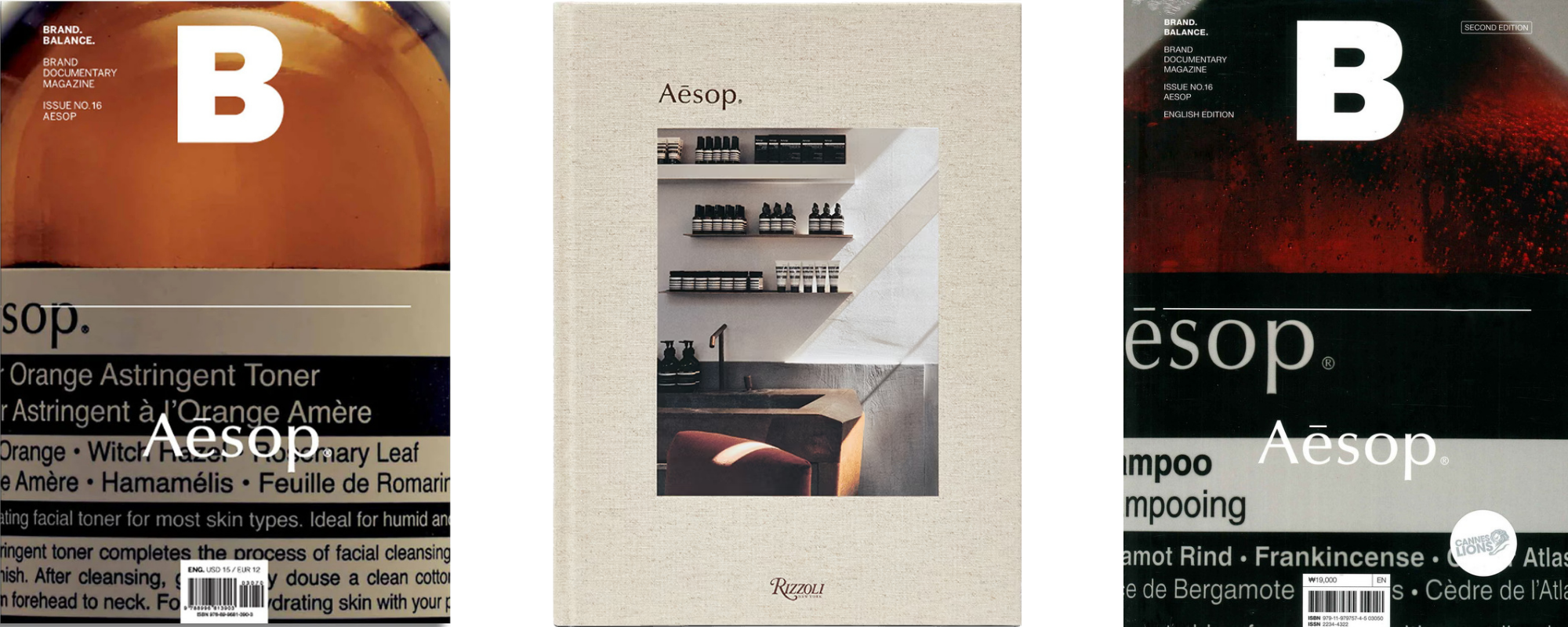
Left to right: Magazine B, Issue 16, 1st Edition; Aesop: the book, 2019; Magazine B, Issue 16, 2nd Edition.
Maison Margiela
Maison Margiela integrates print into its runway and archival practice through show newspapers, Artisanal documentation and exhibition publications that frame each collection within a broader conceptual context. These printed materials are distributed at shows and through official channels, often presenting process notes, imagery and thematic references that extend beyond the garments themselves.
For Margiela, print operates as conceptual framing. It contextualises work without over-explaining it, preserving distance while reinforcing authorship. In an industry that often prioritises visibility, these publications maintain the house’s intellectual posture and sustain a controlled dialogue between archive, atelier and audience.
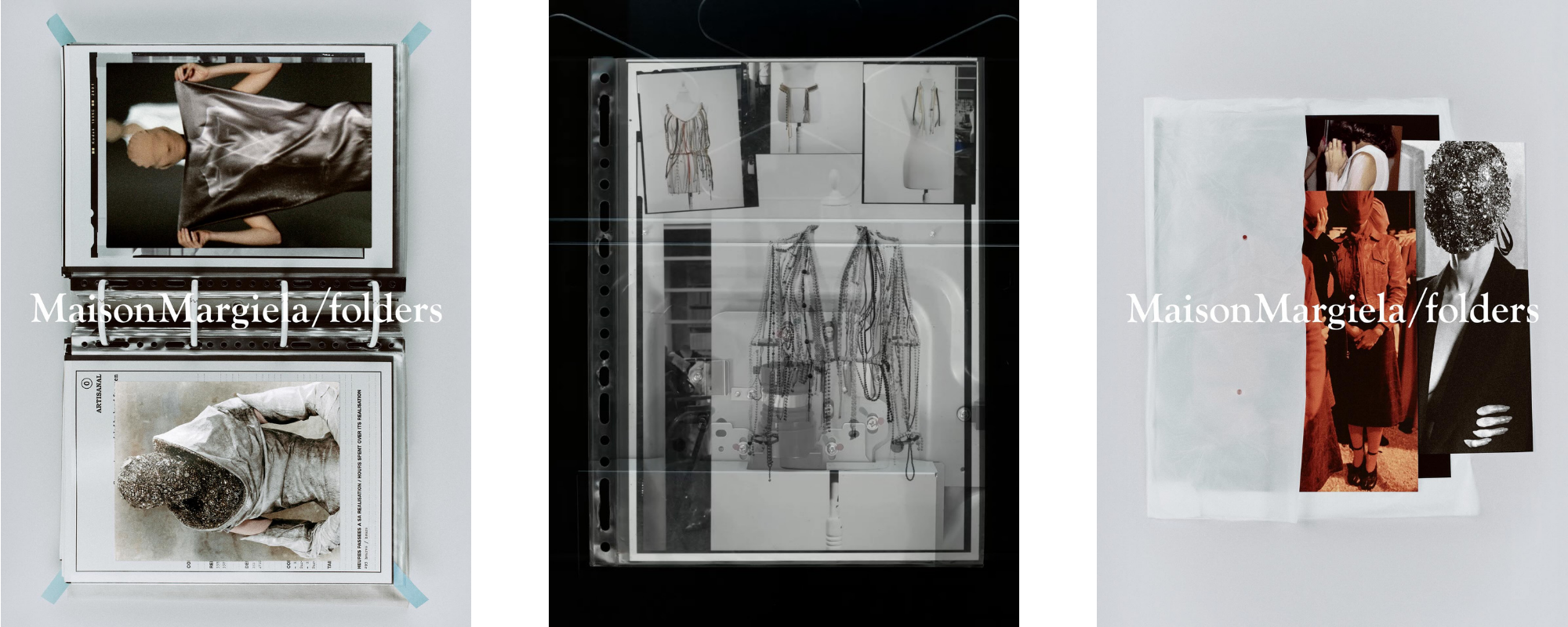
Maison Margiela, MaisonMargiela/folders, 2026.
